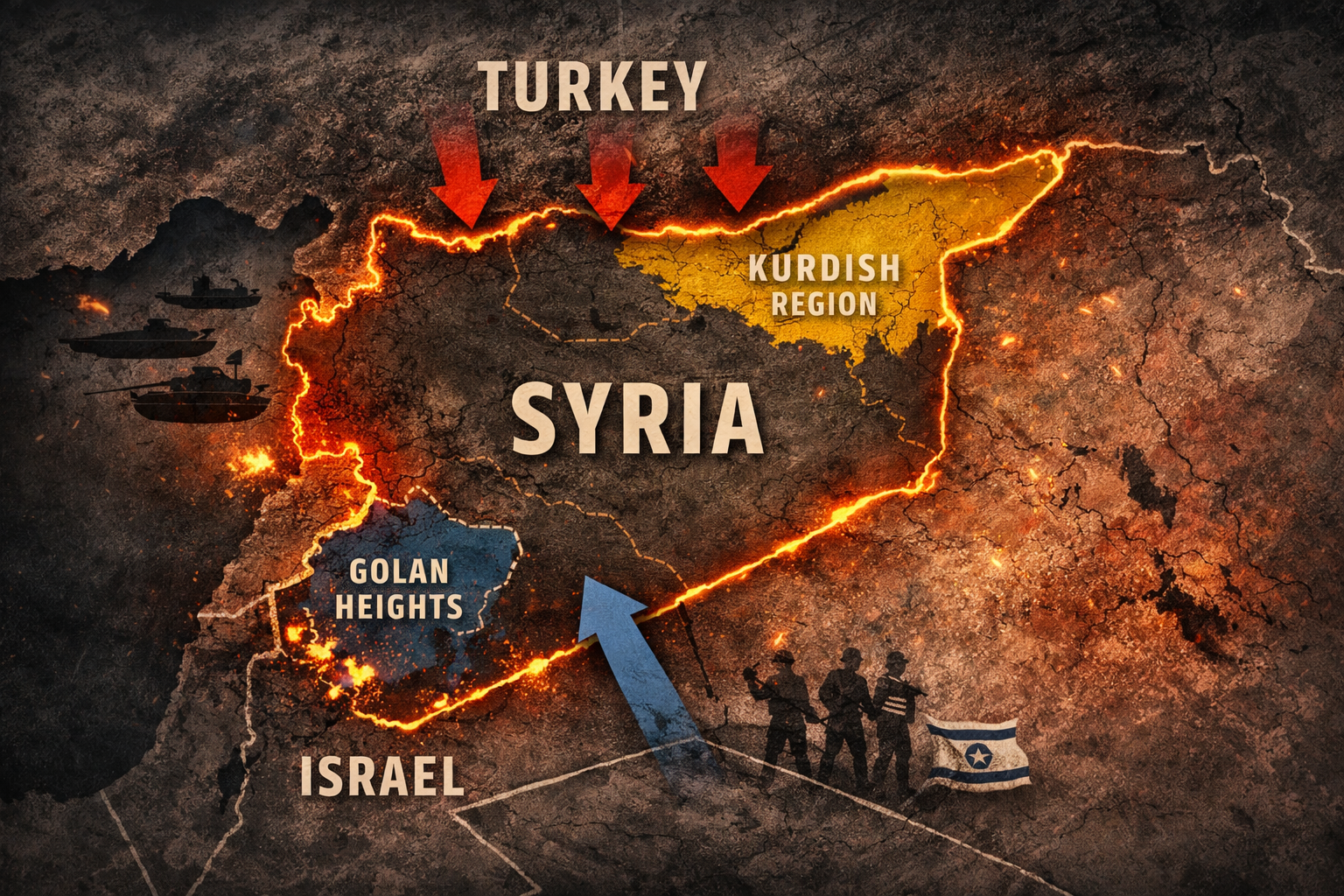
Syria is shaping up to be one of the most brutal battlegrounds of the 21st century. It sits at the fault line between two determined middle powers—Turkey and Israel
Turkey is quietly rebuilding influence reminiscent of a “Greater Ottoman” sphere—stretching across Central Asia, North Africa, East Africa, and the Caucasus. Ankara’s long-term objective is clear:
to become a world power, the leader of the Muslim world, and the undisputed hegemon of Central Asia, the Middle East, and the Eastern Mediterranean.
To achieve this, Turkey believes competing regional forces must be neutralized decisively.
Saudi Arabia and the UAE, despite their immense petro-wealth, are not seen by Turkey as existential threats. Their militaries lack depth, and their military-industrial complexes cannot rival those of aspiring great powers.
Syria, however, is different.
Why Syria MattersSyria is geopolitically invaluable:
Borders Turkey to the north and Israel to the south
Rich in oil, gas, and fertile agricultural
land
A land bridge connecting the Levant to Iraq and the broader Arab world
Control over Syria means leverage over the heart of the Middle East.
The Internal Fault Lines: Minorities and the Question of FederalismSyria is not monolithic. It contains powerful minority groups:
Kurds
Druze
Alawites
These communities have increasingly pushed for a federal Syrian republic, one that reflects the country’s multiethnic reality and grantsTurkey, however, has taken a firm position:
No autonomy. No ethnic restructuring. Absolute centralization of power in Damascus.
Ankara—alongside several Arab states—has warned Syria’s current leadership against federalism and supports a centralized system enforced by force if necessary. This position is not merely rhetorical; Turkey has backed it with boots on the ground.